
 English
 русский
 Français
 Español
 Deutsch
 عربى
عربى


Custom Murals: Materials, Costs, and Installation Guide for Commercial Spaces
Content
Picture a hotel renovation: the lobby has one large feature wall, the owner wants something distinctive, and the first estimate that comes back is a hand-painted mural with a three-week on-site schedule. There is a faster, more predictable option. In commercial interiors, custom murals are increasingly manufactured rather than hand-painted: a factory prints the artwork onto a wallpaper substrate at exact dimensions, with calibrated color and consistent quality across panels. This guide covers substrate selection, cost drivers, production workflow, installation requirements, and maintenance so a custom mural can be specified with confidence.
What a Custom Mural Is Today
Most custom murals specified for commercial projects are not paintings at all; they are manufactured wall coverings printed onto a wallpaper substrate. The term custom mural still includes hand-painted art, modular tile compositions, and vinyl films, but the distinction that matters for procurement is site-made versus factory-made. A factory-made mural offers repeatable color, exact sizing, and predictable lead times, which is why it has become the default for hotels, restaurants, retail chains, and offices. In practical terms, a custom mural is less a painting and more a precisely produced wall covering with custom graphics.
Customization typically covers overall dimensions, mural layout, color palette, surface finish, and panel division. If the wall contains doors, windows, columns, or recesses, the artwork can be adjusted during production so that printed panels line up without awkward gaps. That planning ability is what separates a custom mural from a standard wallpaper run.
Where Custom Murals Add the Most Value in a Building
A mural is not simply decoration; it takes over the entire visual load of a room. The best applications tend to be spaces where a single wall carries the design message and where the substrate can handle the environment around it.
- Hotel lobbies and corridors: feature walls anchor the design style and guide guests through the space; the substrate needs scuff resistance and wipe-clean surfaces.
- Restaurants and cafés: heat, steam, and cleaning chemicals are constant; a scrubbable surface matters more than the pattern itself.
- Corporate offices and meeting rooms: occupants spend long hours next to the wall; low-VOC materials and easy maintenance should be prioritized.
- Retail stores and showrooms: visual campaigns change often; moderate durability at a manageable cost is usually the right trade-off.
- Rental and temporary spaces: irreversible wall attachment can create liability; peel-and-stick options allow removal without major surface repair.
Choosing a Substrate: Nonwoven, PVC, or Peel-and-Stick
Substrate selection has the largest practical impact on how a mural performs after installation. It determines the installation method, the level of resistance to moisture and cleaning, and how easily the wall can be returned to its original state later. Start with the substrate, then choose the pattern.
| Substrate | Durability | Installation and Removal | Best Suited For |
|---|---|---|---|
| Nonwoven | High tear resistance, breathable, stable on large walls | Applied with adhesive on the wall; professional installation recommended; removes in dry strips | Hotel lobbies, offices, and long-term projects |
| PVC | Very high washability, moisture-resistant, handles repeated cleaning | Adhesive application; strong bond; harder to strip later | Corridors, retail, and high-moisture zones |
| Peel-and-Stick | Moderate durability; depends on smooth and sound wall surface | Self-adhesive backing; DIY-friendly; removes without heavy wall damage | Rental spaces, campaign backdrops, temporary refresh |
For most commercial murals, nonwoven is the safest default. It tolerates slight building movement, allows the wall to breathe, and gives installers more time to slide and align each panel. PVC is preferable when the wall will see frequent cleaning or humidity. Peel-and-stick wins wherever reversibility counts more than lifespan.
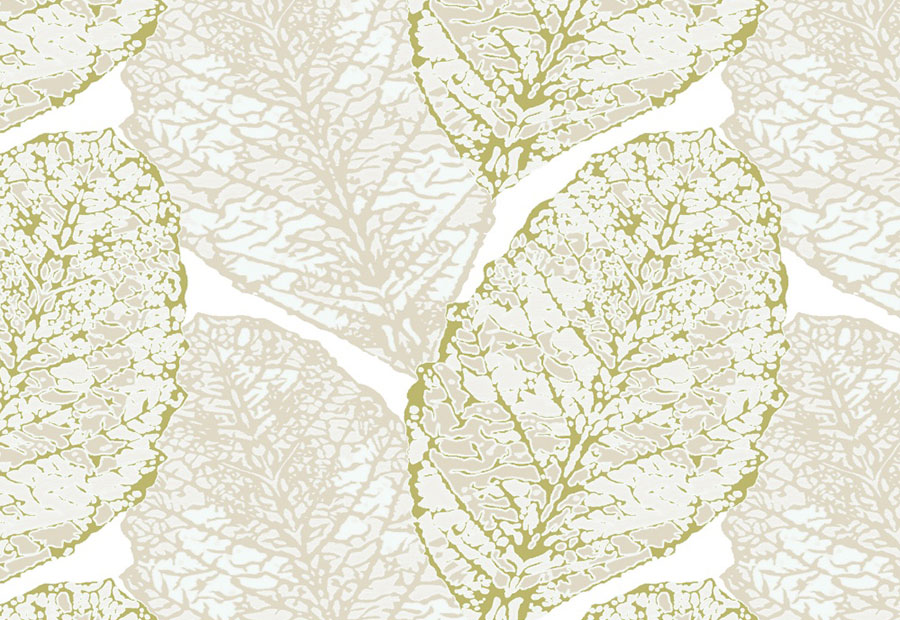 Nonwoven Wallpaper Manufacturer Product RangeThis listing showcases nonwoven wallpapers suited for commercial murals, offering breathability and installation tolerance. Reviewing it helps confirm substrate options before ordering a mural.View Product →
What Determines the Cost of a Custom Mural
The difference between one mural quote and another comes down to three main drivers: wall area, substrate grade, and the amount of design or proofing work. Wall area scales production time directly. Substrate cost per square meter is lower than most buyers expect, but the substrate dictates the maintenance cycle and therefore the total cost over the wall's service life.
Design is usually a fixed line item, not an area-based one. The price rises when the supplied artwork has to be cleaned up, color-corrected, or extended to fit the exact wall dimensions. Always request a printed proof before approving full production. Proofing is a small cost compared with stripping and re-printing an entire wall after an on-site mismatch.
Commercial buyers are also moving from first-cost comparisons to cost-per-year thinking. A stronger nonwoven or PVC surface that survives several years of cleaning and avoids repainting can be cheaper over time than a lighter film that lifts or stains within two seasons. Sustainability is part of that calculation: recent industry exhibitions have framed sustainable and customizable wallcoverings as a growing priority in high-end interior procurement.
PVC remains practical for corridors and retail spaces because its scrubbable face stands up to maintenance that would shorten the life of other substrates.
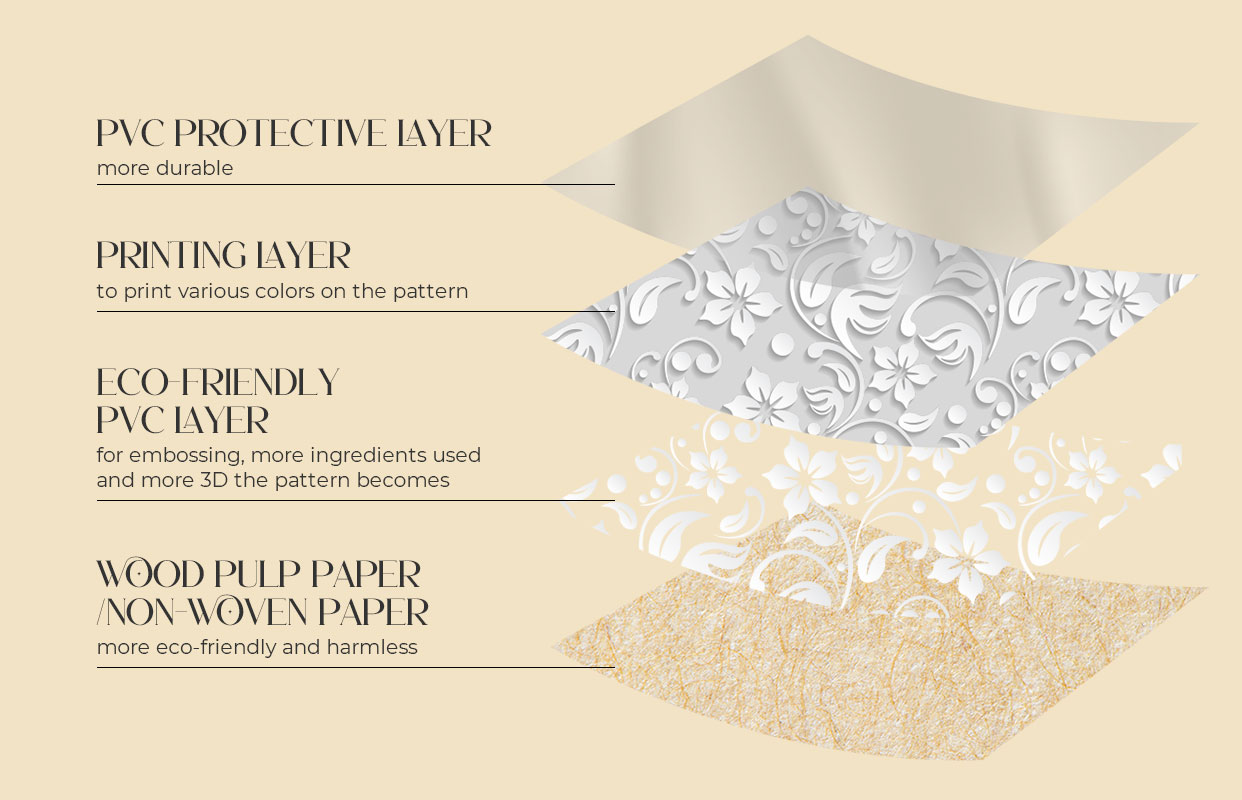 PVC Wallpaper Manufacturer Product LineThis page details PVC wallpapers with durable, scrubbable surfaces ideal for high-traffic or humid areas. It explains maintenance and design flexibility, supporting practical procurement decisions.View Product →
The Production Workflow: From Artwork to Finished Rolls
A manufactured mural follows a predictable sequence. Understanding it helps set realistic lead times and avoids surprises during installation.
- Artwork handoff: send a high-resolution file in PDF or TIFF format, and confirm the pixel dimensions against the actual wall dimensions.
- Color proofing: the factory prints a small sample, and the project team approves it under the lighting conditions of the actual space.
- Substrate confirmation: choose the substrate from the environmental conditions of the wall position.
- Panelized production: the mural is divided into panels according to the wall layout, with each panel numbered and direction marked.
- Batch inspection: for multi-room orders, the full quantity should be produced in the same run so dye-lot variation stays under control.
- Delivery and installation guidance: panels, installation drawings, adhesive suggestions, and cleaning instructions travel with the order.
Hotels and multi-room projects need special attention to batch consistency. If the first delivery comes from a different production run than the last, the color shift is difficult to correct once the panels are on the wall. Ask the manufacturer to confirm full-order synchronization.
If the visual direction is still developing, the inspiration gallery maintained by the manufacturer can narrow down themes before the design phase begins.
Installation and Maintenance
Most mural failures are installation failures. The substrate is rarely at fault; the wall preparation is. The wall must be clean, dry, flat, and primed so the panels do not expand unevenly or peel over time. Air conditioning, direct sunlight, and fresh plaster all affect adhesive behavior, so installation conditions matter as much as the product itself.
Installation by Substrate
- Nonwoven substrates are installed with the paste-the-wall method: adhesive goes on the wall, not on the paper. This keeps the panels manageable and allows slight adjustment during fitting.
- PVC substrates accept standard wallcovering adhesive and require firm pressure on seams to prevent lifting. Use a seam roller after each panel is aligned.
- Peel-and-stick films simply peel off their release liner and stick to the wall. Speed is excellent, but the surface must be smooth because the film shows every minor defect.
Maintenance Notes
Cleaning tolerance follows the substrate. Nonwoven and PVC surfaces can handle a damp cloth for most stains. Peel-and-stick surfaces need a gentler approach because the adhesive layer is close to the printed surface. In all cases, avoid abrasive pads and strong solvents. Test any cleaning method on an inconspicuous area first.
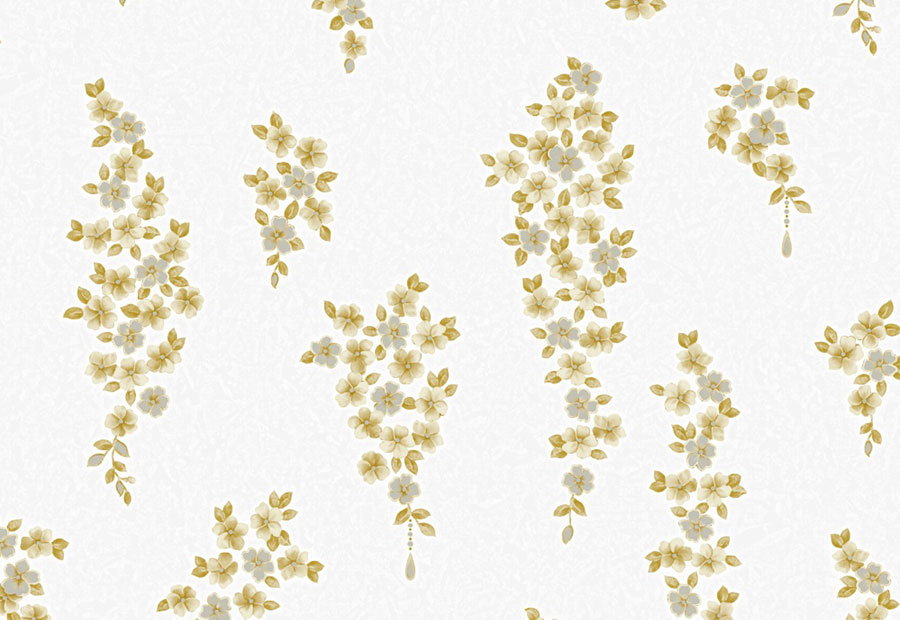 Peel and Stick Wallpaper Manufacturer OfferingsThis section covers peel-and-stick wallpapers, emphasizing reversibility and easier installation. It is worth checking when a project prioritizes removable murals over permanent substrate choices.View Product →
Back to the hotel lobby. The hand-painted estimate is one route, but a manufactured substrate usually delivers better consistency per dollar and shortens on-site time from weeks to days. The practical checklist is short: confirm the proof, match the substrate to the building conditions, verify batch consistency for multi-room orders, clarify who installs the panels, and check what the quoted price actually includes. Custom murals are a standard procurement category now. Treating them as a manufactured wallcovering product, rather than a custom art commission, is the fastest way to get a reliable result.
EXCLUSIVE ACCESS TO PRODUCTS,
OFFERS AND INSPIRATION
-
Quick Links
Wallpapers Customize Our Story Factory News Contact Us -
Contact Us
+86-19157608277 [email protected] Room 509, T2, Fuyi Garden Center, Shangcheng District, Hangzhou City, Zhejiang Province, China

 Eco Friendly Wallpaper Manufacturer Hotel Wallpaper Supplier